February 4, 2026
Sugar alternatives for coffee 2026


Ever wondered how much sugar is really hiding in your daily cup of coffee, and what it’s doing to your body? For millions of coffee drinkers in the USA, adding sugar is a habit that feels small but adds up fast. What if you could enjoy your coffee just as sweet by using sugar alternatives for coffee, without the guilt or the crash that follows?
According to health reports, the average American consumes over 17 teaspoons of added sugar per day, much of it coming from drinks like coffee and flavored beverages. Here’s a fun fact: your taste buds can adjust to less sugar in just a few weeks, making coffee taste better over time. That’s why more people are turning to sugar alternatives, to enjoy their coffee, feel better, and keep their daily routine simple and balanced.
For many people in the USA, coffee isn’t just coffee, it’s sugar with a splash of caffeine. A spoon here, a flavored syrup there, and suddenly your morning cup turns into a hidden sugar habit. The problem is that sugar gives a quick energy lift, but it doesn’t last. Soon after, you may feel tired, unfocused, or craving something sweet again.
Drinking sugary coffee every day can slowly affect your health without you noticing. It adds extra calories, can lead to weight gain, and may raise blood sugar levels over time. The good news is that coffee doesn’t need sugar to taste good. Once you cut back, your taste buds adjust, and you start enjoying the real flavor of coffee without the daily sugar crash.
Not all sugar alternatives work well in coffee, and choosing the wrong one can ruin the taste. A good sweetener should make your coffee enjoyable without changing its natural flavor. It should mix easily in both hot and cold coffee and not leave a strange aftertaste behind. Most people in the USA also prefer options that are easy to find in grocery stores or online.
Another important thing is how it fits into your daily routine. A better sugar alternative should add little to no extra calories and not cause sudden energy ups and downs. The best options let you enjoy your coffee, feel satisfied after drinking it, and keep your mornings simple, without needing extra sugar at all.
In the USA, interest in sugar alternatives for coffee is growing fast as people become more aware of how much sugar they consume daily. Studies show that the average American takes in about 17 teaspoons of added sugar per day, and drinks like coffee play a noticeable role in that number. Because of this, many coffee drinkers are switching to sugar alternatives to cut calories while still enjoying a sweet taste. These options make it easier to enjoy coffee every day without relying on regular sugar, and they generally fall into two groups; natural and artificial each offering different benefits depending on taste preference and lifestyle.
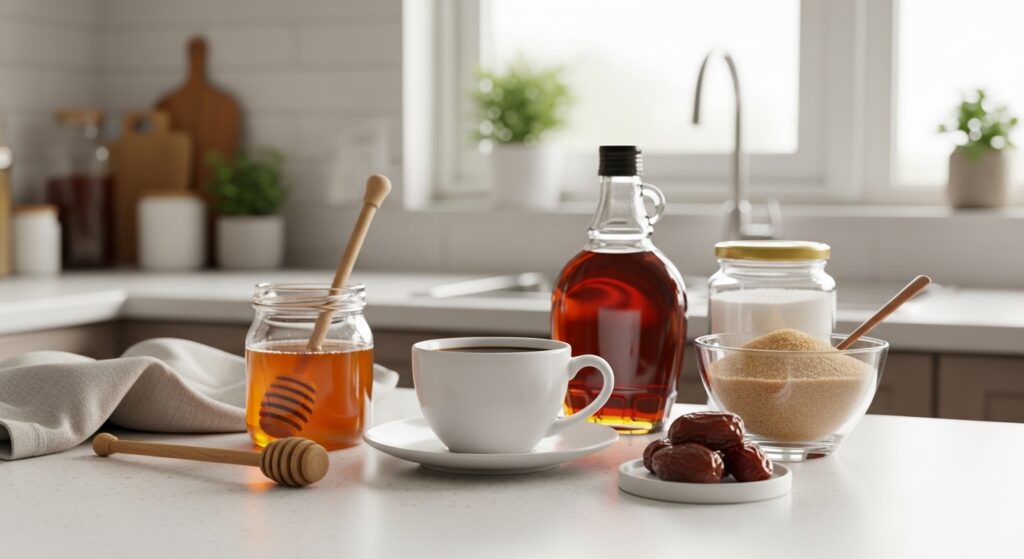
Natural sweeteners are often chosen by people who want a more traditional taste in their coffee. These options usually add flavor along with sweetness, which works well with dark roasts and milk-based drinks. While they are more natural, they still contain calories, so using them in small amounts is key.
| Name | Calories (per tsp) | Best For |
|---|---|---|
| Honey | 21 | Dark roast coffee |
| Maple Syrup | 17 | Lattes |
| Coconut Sugar | 15 | Strong coffee |
| Agave Nectar | 21 | Iced coffee |
| Date Sugar | 16 | Ground coffee |
| Molasses | 15 | Bold coffee blends |
| Brown Rice Syrup | 15 | Light roasts |
| Cane Sugar | 16 | Traditional coffee |
| Palm Sugar | 15 | Espresso |
| Raw Sugar | 16 | Everyday use |
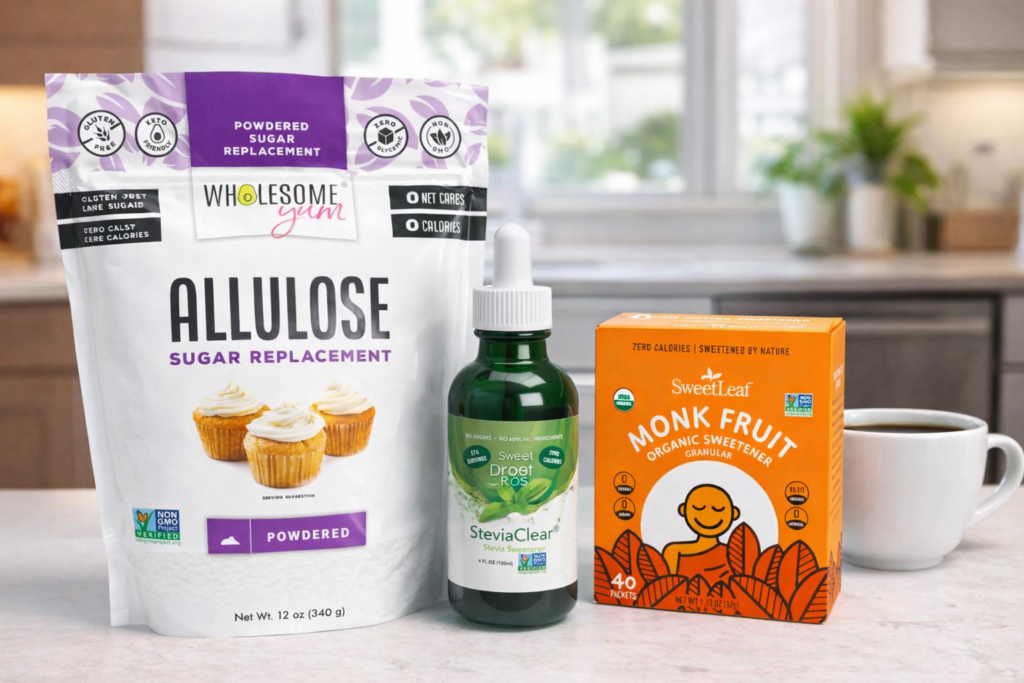
Artificial sweeteners are popular because they provide sweetness with little to no calories. These are widely used in the USA by people looking to cut back on sugar while still enjoying sweet coffee. The key is using a small amount, as most of these sweeteners are much stronger than sugar.
| Name | Calories (per tsp) | Best For |
|---|---|---|
| Stevia | 0 | Hot & iced coffee |
| Monk Fruit | 0 | Daily coffee |
| Erythritol | 0 | Cold brew |
| Aspartame | 0 | Instant coffee |
| Sucralose | 0 | Flavored lattes |
| Saccharin | 0 | Strong coffee |
| Allulose | 2 | Hot coffee |
| Acesulfame-K | 0 | Coffee mixes |
| Stevia Blend | 0 | Balanced sweetness |
| Monk Fruit Blend | 0 | Closest to sugar |
You can use stevia, monk fruit sweetener, erythritol, honey, or maple syrup instead of sugar. These options add sweetness with fewer calories or less sugar than regular table sugar, making them popular choices for daily coffee.
The best sugar substitute for coffee is monk fruit sweetener because it tastes closest to real sugar and has zero calories. Stevia is also a good option if you want a strong, low-calorie sweetener.
Stevia, monk fruit sweetener, erythritol, and allulose are good choices because they do not cause sudden blood sugar changes. These options are commonly used by people who want to enjoy sweet coffee without sugar effects.
The healthiest alternatives to sugar are stevia and monk fruit sweetener. They contain no calories and are widely used by people looking to reduce sugar intake while still enjoying sweet flavors.
For baking, erythritol, allulose, coconut sugar, and monk fruit blends work best. These sweeteners hold up well to heat and are commonly used in coffee-based desserts and baked goods.
For weight loss, stevia and monk fruit sweetener are the best substitutes. They add sweetness without calories, helping reduce overall sugar intake while still enjoying coffee.
Popular natural sugar alternatives for coffee include honey, maple syrup, coconut sugar, and date sugar. These options add flavor along with sweetness and are best used in small amounts.
Stevia, monk fruit sweetener, erythritol, and allulose are commonly used by diabetics because they do not raise blood sugar levels like regular sugar.
The best sugar substitutes for coffee for diabetics are stevia and monk fruit sweetener. These are widely available in the USA and are easy to use in both hot and cold coffee.
Healthy sugar alternatives for coffee include stevia, monk fruit sweetener, erythritol, and small amounts of honey or maple syrup. The healthiest choice depends on whether you want zero calories or a natural option.
The best choice comes down to your taste and daily habits. Some people prefer natural sweetness, while others want a low-calorie option that fits an everyday routine. No matter your preference, switching to sugar alternatives for coffee can help you cut back on added sugar without giving up flavor. Start small, experiment with different options, and you may find that your coffee tastes better, feels lighter, and fits more easily into a balanced lifestyle.
If you want more coffee information, make sure to check our blog daily and share it with your friends.